
From Garba to goodwill: Sewa Europe connects with the community at Berlin Navratri 2026


We came for Garba and left with new friends who want to help.
On 17 October 2026, the beat of the dhol, colourful traditional attire and the spirit of Navratri filled Berlin. Gujarati Samaj Berlin e.V. organised Berlin Navratri 2026 and calls it Germany's biggest Navratri for the fourth year in a row. Sewa International Europe set up an information stall there to share its humanitarian work and meet people who care about serving society.
Bringing the spirit of Sewa to the community
Visitors came to the Sewa Europe stall curious about who we are and what we do. Sewa means selfless service for the welfare of all, and our volunteers showed how that becomes action through humanitarian relief, education and social welfare across Europe and beyond.

Most of all, the stall was about conversation. Visitors asked how they could give their time, skills or resources, and several left with new friendships and ideas for working together.
More than a cultural celebration
Navratri celebrates the victory of good over evil and honours the divine feminine power. Its message of courage and compassion is close to Sewa's belief in serving others without expecting anything in return.

The crowd itself carried that message. According to the organisers, around 35% of guests came from across India, from Kashmir and Punjab to Kerala, Tamil Nadu, Assam and Maharashtra. Another 11% came from beyond India, including Poland, Italy, Sweden, Ireland, the UK, the USA, Turkey and Nepal. The organisers described the evening as a reflection of Vasudhaiva Kutumbakam, the idea that the world is one family, which is also at the heart of Sewa.
In that warm, familiar setting, the energy of Garba opened natural conversations about community, volunteering and giving back.
A conversation that went beyond the dance floor
Not every conversation was about Garba. One visitor shared a keen interest in a question that matters across the continent: what happens to Europe's electricity grid when disaster strikes?
Europe's power systems are linked across borders. Researchers say this integration generally makes supply more resilient, but it also raises the risk that a failure spreads quickly from one country to the next. The pressure is growing: Eurelectric, the European electricity industry association, expects heatwaves, floods and storms to become more frequent in the coming decades. Recent years show what that looks like:
Floods: in July 2021, floods in Belgium and Germany left 200,000 customers without power.
Storms: in winter 2021–22, storms in the UK and Ireland left over one million households without electricity. In January 2025, Storm Éowyn brought gusts of up to 184 km/h to Ireland and caused extensive damage to the network.
Heat and drought: research on Germany finds more power plant outages during droughts and high temperatures. Low water levels can also hold back hydropower.
A wake-up call: the Iberian blackout of 28 April 2025 was not caused by a natural disaster. It was Europe's most significant blackout in more than two decades, and some people in Spain and Portugal waited up to 16 hours for power.
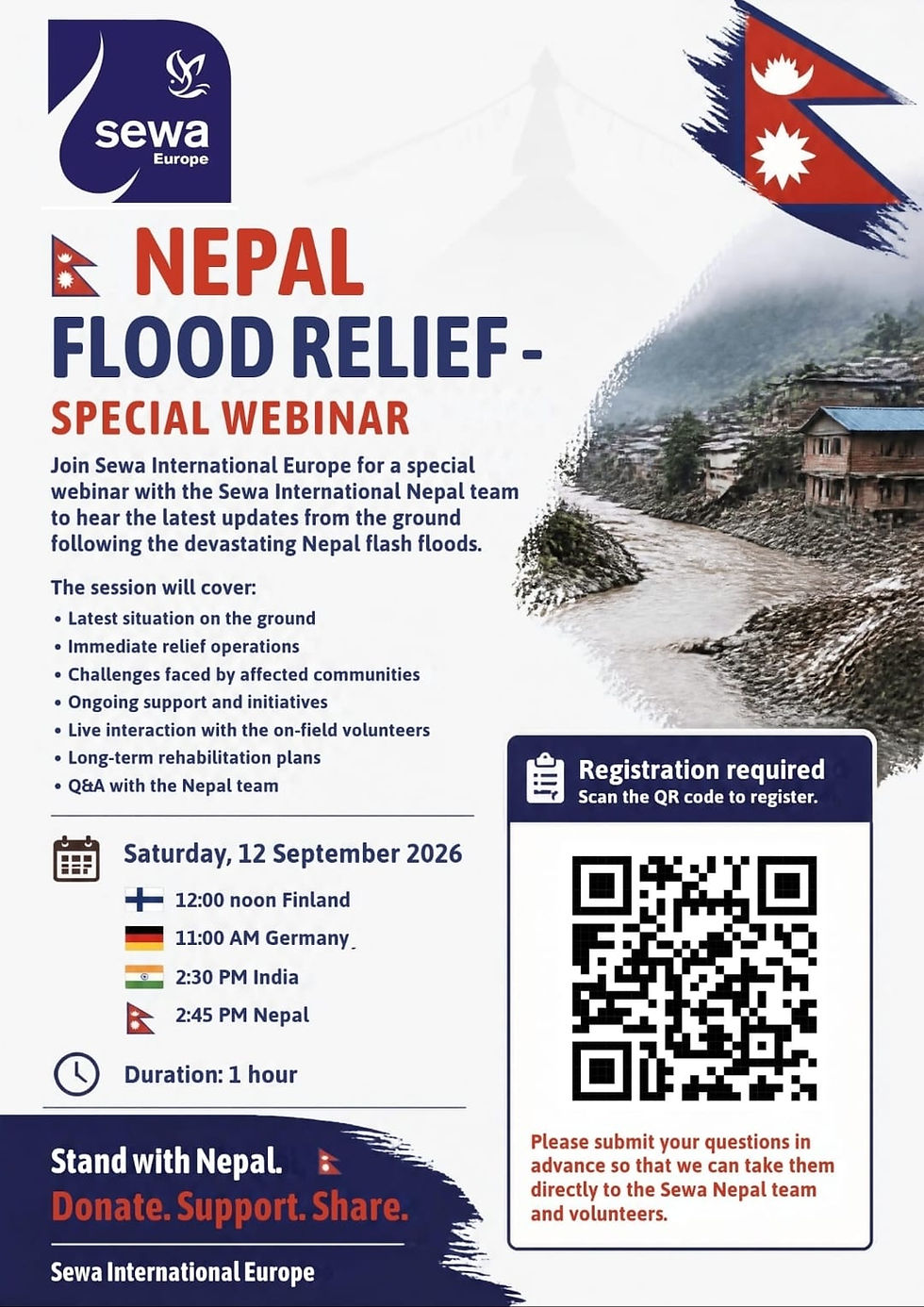
When the lights go out, heating, medicines kept in fridges, water pumps and phone charging can all stop, and older people, the sick and the isolated are hit hardest. This is where the spirit of Sewa matters. Disaster response begins with people looking after each other, as in Sewa Europe's 2026 flood relief in Nepal, and volunteers who know their neighbourhoods can reach those in need first.
Together, we serve better
Meeting people who want to support Sewa's work was the most encouraging outcome of the evening. Conversations like these show how community events can bring new volunteers and supporters into the Sewa family, and they help Sewa Europe build a network of people committed to making a difference across European communities.
Sewa International Europe thanks Gujarati Samaj Berlin e.V. for bringing the community together at Berlin Navratri 2026 and for the chance to meet its guests.
The evening left us with a simple thought: when communities come together, celebration can become the beginning of service.
Together, we serve better.
To learn more about Sewa International Europe and find ways to get involved, visit www.sewaeurope.org.


Comments